
Basic Fermented Cabbage (Homemade Sauerkraut)
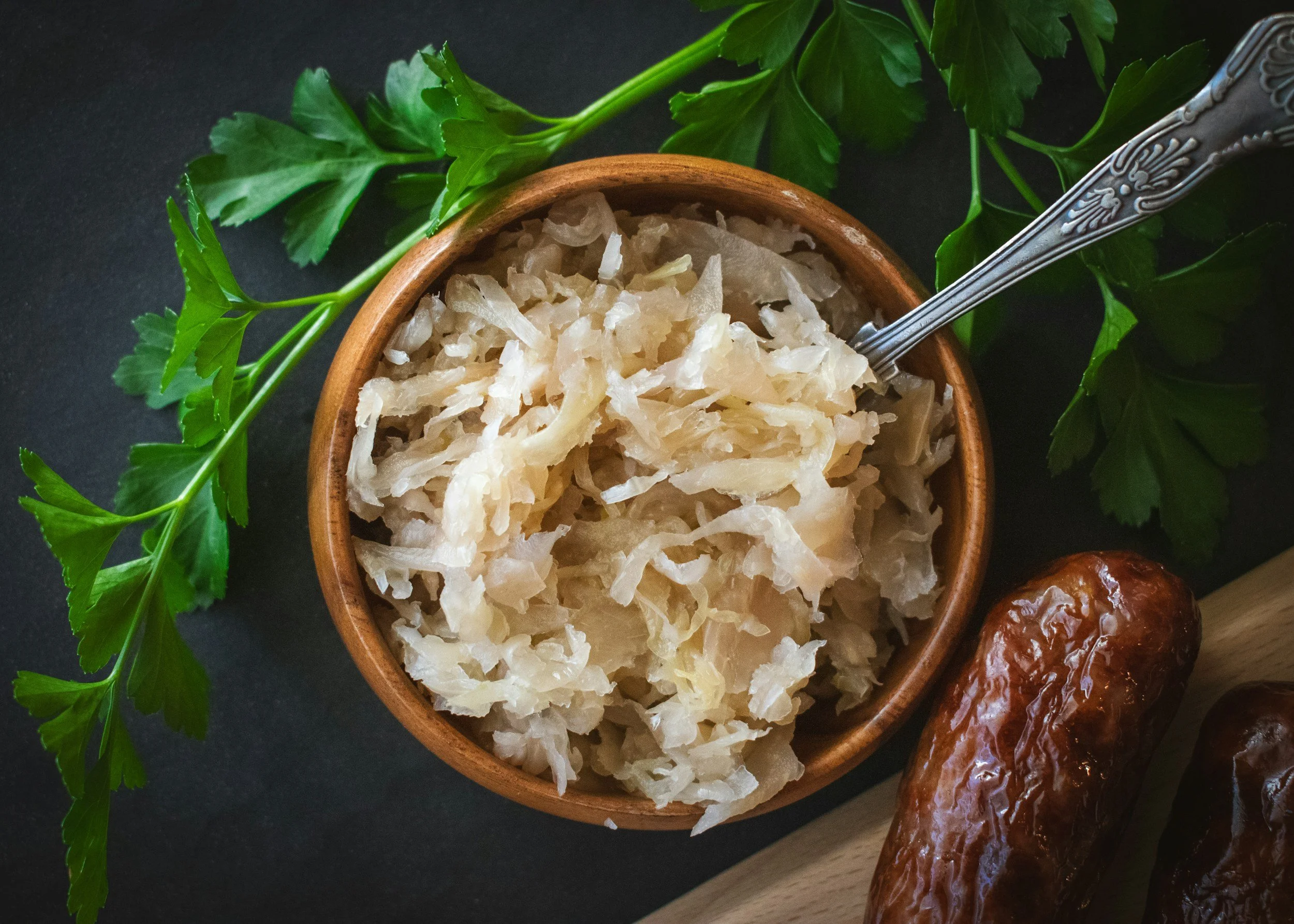
Basic Fermented Cabbage (Homemade Sauerkraut)
Making fermented cabbage at home is simpler than it sounds—and incredibly rewarding. All you need are a few basic ingredients, a little patience, and time for nature to do its thing.
Before we get into the recipe, let’s clear up a common point of confusion.
Pickled vs. Fermented Cabbage: What’s the Difference?
The key difference between pickling and fermenting is how the sour flavor is created.
Pickled cabbage is made by adding an acidic liquid (like vinegar) to vegetables.
This method does not involve fermentation.Fermented cabbage becomes sour naturally, without any added acid.
Beneficial bacteria convert the natural sugars in cabbage into lactic acid over time—this is what creates that tangy flavor and the probiotics.
This recipe focuses on true fermentation, the traditional way sauerkraut has been made for generations.
Ingredients
1 head of cabbage (green or purple, about 3–4 lb)
1½ tablespoons kosher salt or 1 tablespoon fine sea salt (see my products page for salt suggestions - Premier Pink Salt & Ma-kai Sea Salt)
Filtered water (only if needed)
For extra brine (if needed):
1 cup filtered water
1 teaspoon sea salt, stirred until dissolved
Equipment
A large glass jar with a lid
Fermentation weights or clean stones (optional but helpful)
Salt note:
Sea salt is preferred. Iodized salt may slow down fermentation. Himalayan salt (pink or white) can also be used.
How to Make Fermented Cabbage
Like most fermented foods, this process requires time. When cabbage is sliced and fermented in a jar, it usually takes 10–14 days. (Whole heads in large containers take even longer.) This recipe is designed for easy, at-home sauerkraut in jars.
Instructions
Prepare for fermentation
Make sure all tools—jars, lids, knives, and cutting boards—are clean and dry.Prep the cabbage
Remove the outer leaves. Cut the cabbage in half, then into quarters, and remove the core.Slice
Thinly slice the cabbage and place it in a large bowl.Salt and massage
Sprinkle the salt over the cabbage. Using your hands, massage and squeeze the cabbage for about 5 minutes.
It will soften and start releasing liquid.Pack the jars
Pack the cabbage tightly into the jar(s), pressing it down firmly. Pour in any liquid released during massaging.Weigh it down
Use fermentation weights or clean stones to keep the cabbage submerged in its liquid.Cover loosely
Place the lid on loosely (do not tighten), or cover with a cloth secured with a rubber band.Wait 24 hours
The cabbage will continue releasing liquid. Press it down occasionally.Check liquid level
After 24 hours, the cabbage should be fully submerged.
If not, add extra brine (1 tsp salt per 1 cup filtered water) until covered.Ferment
Keep covered and let ferment for 3–14 days, ideally at 60–75°F, away from direct sunlight in a kitchen pantry or cabinet. Do not refrigerate.Taste and finish
Start tasting after day 3. When it tastes right to you (for me, that’s usually 10–11 days), remove the weight, tighten the lid, and refrigerate.
Storage
After fermentation is complete, store in the refrigerator for up to 2 months
Flavor continues to develop slowly while chilled
How to Enjoy Fermented Cabbage
Serve it:
As a side dish
Added to salads or bowls
In soups, sandwiches, or wraps
Cooked with meat and other vegetables for a tangy, flavorful meal
A little goes a long way—and your gut will thank you 💚
Troubleshooting :
If you’re new to fermenting, it’s normal to feel unsure. Fermentation is a living process, so things may look or smell unfamiliar, but most of the time, that’s exactly what’s supposed to happen.
1. It smells sour or strong
This is normal.
Fermented cabbage should smell tangy, sour, or slightly sulfur-like—especially in the first few days.
✔ Normal smells: sour, tangy, slightly funky
❌ Not normal: rotten, putrid, or “trash-like”
If the smell is truly unpleasant, trust your instincts and discard it.
2. Bubbles or white film on top
This is a good sign that fermentation is active.
Bubbles = healthy fermentation
A thin white film (kahm yeast) is harmless
✔ Gently skim it off
✔ Make sure cabbage stays submerged under liquid
❌ Discard if you see fuzzy mold that is green, black, blue, or pink.
3. Cabbage floating above the liquid
This is very common for beginners.
✔ Press cabbage down daily
✔ Use fermentation weights or clean stones
✔ Add extra brine if needed
Key rule: cabbage must stay fully submerged to stay safe.
4. Not enough liquid after 24 hours
Some cabbages are drier than others.
✔ Add salted water (1 tsp sea salt per 1 cup filtered water)
✔ This protects the cabbage and supports proper fermentation
This will not “ruin” your batch.
5. Fermentation seems slow
This is usually due to temperature.
Ideal range: 60–75°F
Cooler homes = slower fermentation (and often better flavor)
✔ Be patient—slow ferments are not bad ferments.
6. Too salty or too sour
Too salty: rinse lightly before eating or mix with fresh veggies
Too sour: ferment for fewer days next time or use cooked in meals
Fermentation flavor is personal—there’s no “right” taste.
Histamine-Sensitive Fermentation Tips 🌿
Fermented foods are naturally higher in histamines, which can be an issue for some people.
If you’re histamine-sensitive:
Ferment for shorter periods (3–5 days instead of 10–14)
Choose very fresh cabbage
Keep fermentation temperatures cool and stable
Refrigerate as soon as it reaches a mild, pleasant sourness
Start with small portions (1–2 tablespoons)
If symptoms appear (headache, flushing, itching, fatigue, digestive upset), pause and reassess before continuing.
“Is It Safe to Eat?” Quick Checklist ✅
Ask yourself these questions before eating:
✔ Is the cabbage fully submerged in liquid?
✔ Does it smell pleasantly sour (not rotten)?
✔ Are there bubbles or signs of fermentation?
✔ Is there no fuzzy, colorful mold present?
✔ Does it taste tangy but not offensive?
If you answered yes to all of these—your fermented cabbage is safe to eat.
When in doubt, trust your senses. Your body is a great guide.
Final Encouragement 🌱
Fermentation is an ancient skill that humans have practiced for thousands of years—without thermometers, recipes, or perfection. Every batch teaches you something, and confidence comes with experience.
Start slow. Stay curious.